
Can Dusty Ductwork Cause Problems For Your Health ?
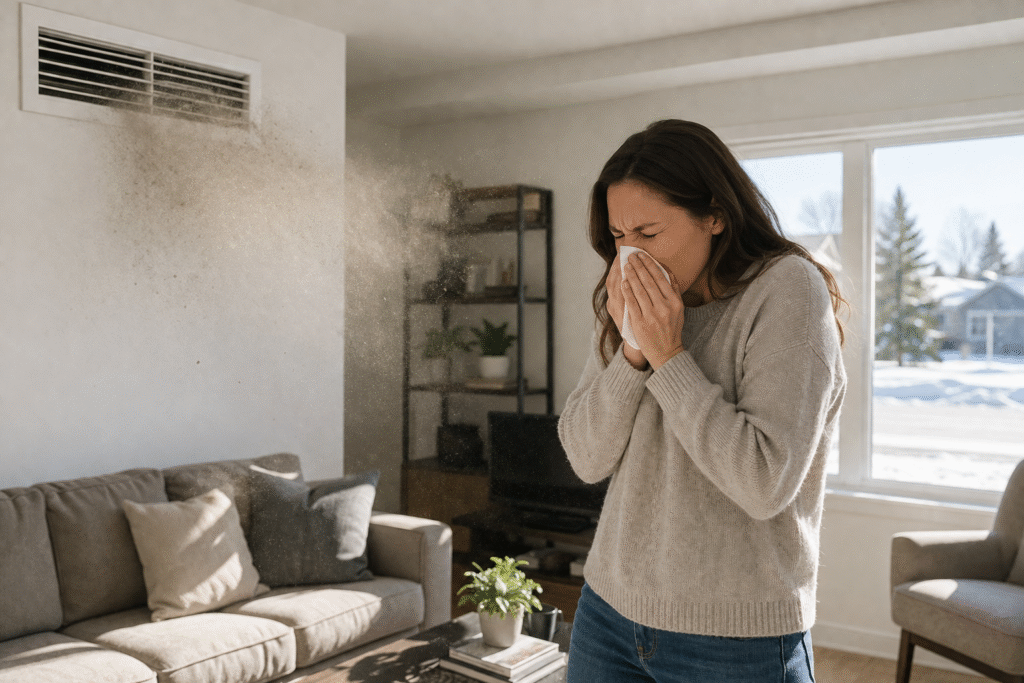
Dusty Ductwork is something most homeowners don’t really pay attention to until something in the home feels off. The Indoor air quality is something most homeowners only start to think about when something feels off inside the home. The house may feel dusty no matter how often it gets cleaned. The air may feel heavier than usual. Some people may notice that allergy symptoms get worse indoors than outdoors. When that happens, one common question comes up: can dirty air ducts actually cause health problems?
The simple answer is no, not directly. Dirty air ducts do not usually cause illness on their own. However, they can affect how clean the air feels inside a home. They can also increase irritation for people who are sensitive to dust, pollen, or other airborne particles.
To understand this better, it helps to look at how an HVAC system works. Air ducts move air throughout the home in a continuous cycle. The system pulls air through return vents, passes it through heating or cooling equipment, and then pushes it back into rooms through supply vents. If dust and debris build up inside the ductwork, the system can move small particles back into the air each time it runs.
This does not usually create unsafe conditions. But it can reduce comfort and make the indoor environment feel less clean over time.
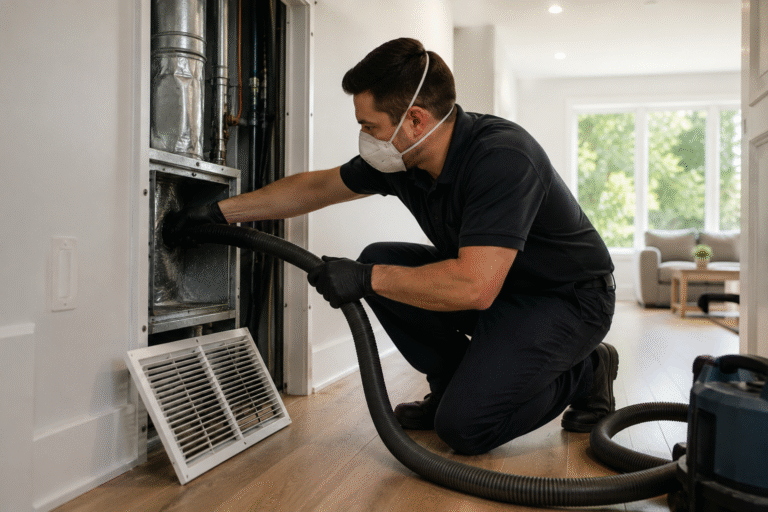
At National Duct, we focus on explaining duct cleaning in a realistic way. We do not treat it as a health solution or a cure for medical issues. Instead, we treat it as HVAC maintenance that helps remove built-up debris from inside the system.
What builds up inside air ducts over time
Air ducts collect dust in almost every home. This happens naturally because the HVAC system moves air all day. Every time air moves through the system, it carries small particles with it.
These particles include everyday household dust, pet hair, dander, fabric fibers from clothing and furniture, and outdoor particles like pollen and dirt. Over time, these particles enter the ductwork and begin to settle along the inside surfaces.
The buildup process is slow. Most homeowners never see it happening. Dust does not appear all at once. It collects gradually over months and years.
Some homes build up debris faster than others. Homes with pets usually see more buildup because animals shed hair and dander continuously. Homes that go through renovations often experience higher dust levels because construction work releases fine particles into the air. These particles easily enter return vents and move into the HVAC system.
Even without pets or renovations, every home produces dust. That dust always finds its way into the duct system over time.
How buildup affects airflow and cleanliness
As dust and debris accumulate, the HVAC system can start to move some of that material back into the home. Homeowners may notice that dust builds up faster on furniture and surfaces. They may also see dust collecting around vents or registers.
In some homes, the air may feel less fresh when the system turns on. This can happen if the ducts have not been cleaned in many years or if buildup has become heavy.
Airflow can also feel slightly uneven in some cases. This depends on how much buildup exists inside the system and how the HVAC system is designed. While this is not usually dangerous, it can make the system feel less efficient or less clean.
These signs do not always mean there is a serious issue. They usually indicate that the system contains accumulated debris that is being circulated during normal operation.
Can dirty ducts actually affect your health?
Dirty ducts do not directly cause health problems for most people. The level of dust and debris found in residential duct systems is usually not high enough to create illness on its own.
However, dirty ducts can still affect how people feel inside their homes. Individuals with asthma, allergies, or other respiratory sensitivities are more likely to notice changes in indoor air quality.
When dust, pollen, or pet dander moves through the HVAC system, it can reach living spaces and trigger mild symptoms. These symptoms may include sneezing, coughing, congestion, or general irritation. For sensitive individuals, these reactions can feel more noticeable indoors than outdoors.
It is important to understand that indoor air quality depends on many factors working together. Ductwork is only one part of the system. Filtration, ventilation, humidity levels, and general cleaning habits all play important roles in how air behaves inside a home.
For example, a home with clean ducts but a dirty or clogged filter can still have air quality issues. The filter is responsible for capturing airborne particles before they enter the HVAC system. If the filter does not work properly, dust can still circulate through the home.
On the other hand, a home with some duct buildup but strong filtration and proper ventilation may still maintain comfortable air quality. This shows that duct condition alone does not determine overall indoor air quality.
Moisture is another important factor. If moisture enters the HVAC system, it can create conditions where mold may develop. In these situations, duct cleaning alone is not enough. The moisture source must be identified and fixed first. Without that step, cleaning will not prevent the problem from returning.
When duct cleaning becomes important
Duct cleaning becomes most useful when there is a clear reason for it. It is not something every home needs on a fixed schedule, but certain situations make it more necessary.
One of the most common situations is after renovations. Construction work creates a large amount of fine dust. Activities like sanding drywall, cutting wood, or removing flooring release particles into the air. Even if the home looks clean afterward, much of that dust can remain inside the duct system.
Homes with pets often experience more frequent buildup. Pets shed hair and dander every day. Over time, this material can collect inside the HVAC system and increase the amount of debris circulating through the home.
Another situation is long-term maintenance gaps. If a home has not had duct cleaning or HVAC maintenance in many years, dust and debris can build up to a level where it begins to affect cleanliness and airflow.
Some homeowners also notice warning signs. These can include visible dust around vents, uneven airflow between rooms, or a stale smell when the HVAC system starts. These signs often suggest that debris inside the system is being redistributed into the home.
However, duct cleaning should not be treated as a solution for every air quality concern. It does not replace regular filter changes, ventilation, or humidity control. If those systems are not maintained, indoor air quality can still suffer even after cleaning.
How duct cleaning fits into indoor air quality
Indoor air quality depends on several systems working together at the same time. Duct cleaning is only one part of that overall system. It helps remove debris that has built up inside the HVAC network, but it does not control all factors that affect air inside the home.
Filtration plays a major role. Furnace filters trap airborne particles before they enter the system. When filters are changed regularly, they reduce how much dust reaches the ductwork. This helps slow down buildup over time.
Ventilation also matters. Fresh air exchange helps remove stale air and reduce indoor pollutants. Kitchens and bathrooms especially rely on proper ventilation to remove moisture and airborne particles from the home.
Humidity control is another key factor. High humidity can support mold growth and make the air feel heavy. Low humidity can cause dryness and irritation. Keeping humidity at balanced levels helps improve comfort and reduces strain on the HVAC system.
When all these systems work together, duct cleaning becomes a supportive maintenance step rather than the main solution. It helps keep the system cleaner, but it works best when combined with proper filtration, ventilation, and humidity control.