
Why Does Burning Dust Smell When the Heat Turns On?
If you’ve ever turned on your furnace for the first time in fall and noticed a sharp, burning dust smell, you’re not alone. This is one of the most common questions homeowners ask, and in most cases, it’s completely normal.
Understanding why burning dust smells, how long it should last, and when it could signal a problem can help keep your home comfortable and safe.
What Is That Burning Dust Smell?
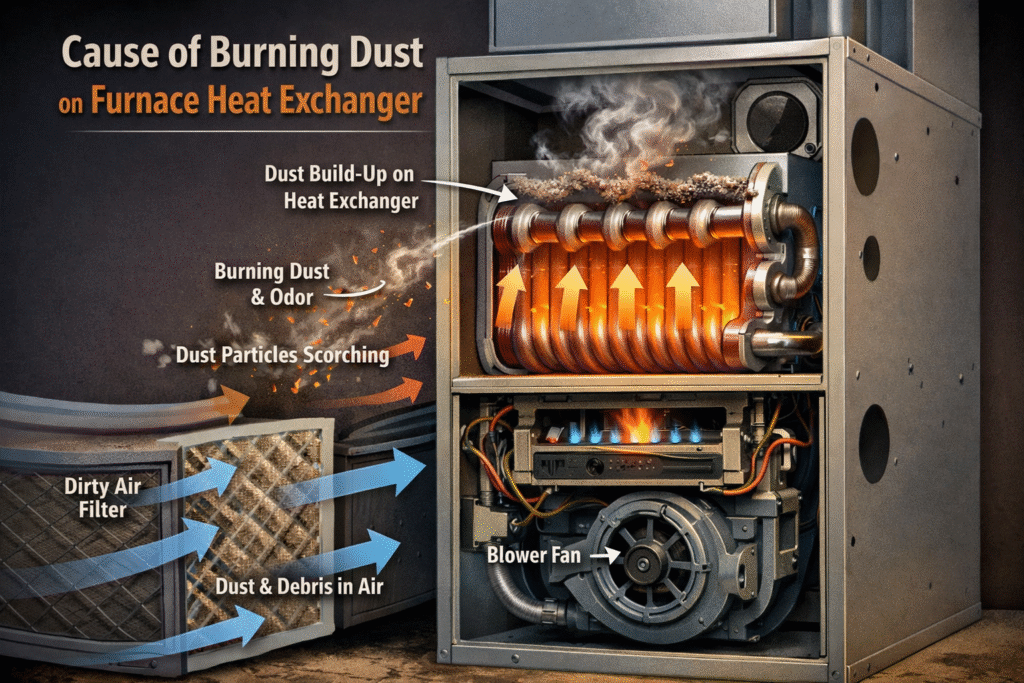
The burning dust smell occurs when dust, pet hair, and debris that has settled on your furnace’s heat exchanger, burners, or heating elements begins to heat up.
During warmer months, heating systems sit idle. Dust naturally collects on:
- Furnace heat exchangers
- Electric heating coils
- Baseboard heaters
- Supply and return vents
- Inside ductwork
When the heat turns on, this dust burns off, creating a temporary smell.
Is the Burning Dust Smell Normal?
In most cases, yes. The smell is considered normal if:
- It happens the first time the furnace runs in months
- The smell lasts only minutes or a few hours
- The odour fades as the system continues to run
This is simply dust being burned off the heating components.
How Long Should the Smell Last?
In most homes:
- 15 minutes to one hour is very common
- A few hours can be normal if there is heavy dust buildup
- The smell should disappear within 24 hours
If the smell lingers beyond a day, further investigation is recommended.
When the Smell Is Not Normal
You should take action if the burning smell:
- Lasts longer than 24 hours
- Smells like melting plastic or chemicals
- Produces visible smoke
- Causes headaches or breathing irritation
- Triggers smoke or carbon monoxide alarms
If any of these occur, turn the system off and contact a professional.
Common Causes of Strong or Ongoing Burning Smells
Excessive Dust in Ductwork
Ducts that have not been cleaned in years can hold significant dust, creating stronger and longer-lasting odours.
Dirty Furnace Components
Dust and debris on internal furnace parts can burn for extended periods.
Clogged Air Filters
Restricted airflow from dirty filters allows dust to overheat and burn inside the system.
Renovation or Construction Dust
Drywall dust, sawdust, and insulation particles produce harsh smells when heated.
Does A Burning Dust Smell Affect Indoor Air Quality?
Yes, temporarily. Burning dust releases fine airborne particles that can cause:
- Eye, nose, and throat irritation
- Coughing or sneezing
- Worsened asthma or allergy symptoms
This is more noticeable in homes with pets, smokers, or older duct systems.
How to Reduce or Prevent the Burning Dust Smell
Homeowners can reduce burning dust smells by:
- Changing furnace filters regularly
- Running the furnace briefly before cold weather
- Keeping vents and registers clean
- Cleaning after renovations
- Scheduling professional duct cleaning every few years
Why Professional Duct Cleaning Helps
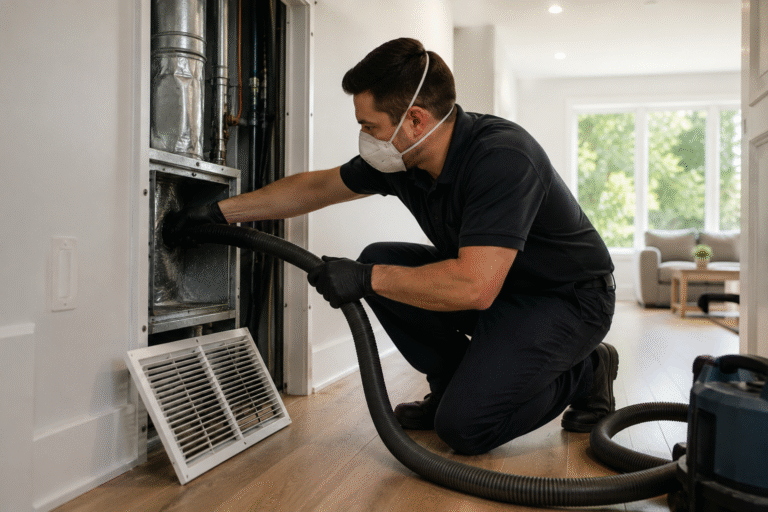
Professional duct cleaning removes years of built-up dust and debris from inside your duct system. Clean ducts help reduce odours, improve airflow, and support healthier indoor air quality.
Final Thoughts
A burning dust smell is usually harmless and temporary. However, strong or persistent smells may indicate excess dust or a system issue that needs attention. National Duct can help reduce burning dust smells by thoroughly removing built-up dust, debris, and contaminants from inside your ductwork and HVAC system.
Over time, dust settles throughout the ducts and heating components, and when the furnace turns on, that dust heats up and creates odours. As Canada’s largest air duct cleaning contractor, National Duct uses proven cleaning methods and industry-leading standards to clean areas homeowners can’t see or reach. Clean ductwork means less dust circulating through your home, fewer odours when the heat turns on, and improved indoor air quality you can notice right away.
Call us — because we will not call you.